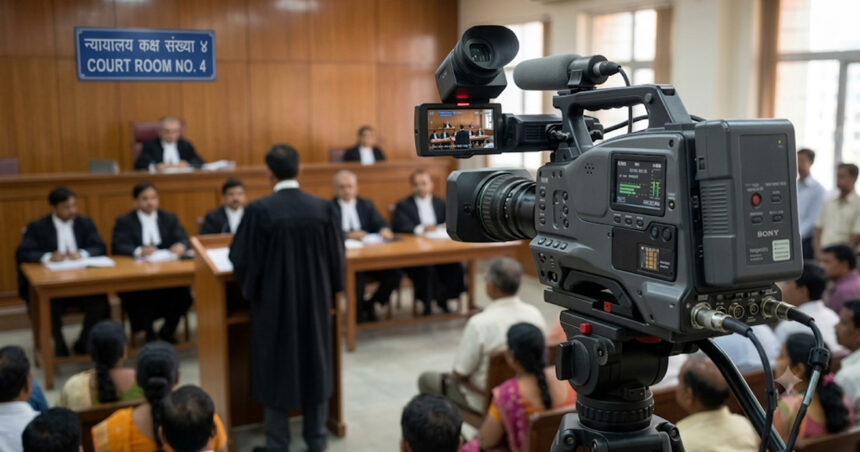
That viral clip of a judge pulling up a lawyer may be breaking a Supreme Court order. On 30 October 2026, the court asked the Centre to build action against violators into its upcoming policy on court video clips on social media. Since July, posting or monetising recordings of court hearings without permission has been barred.
Key takeaways
• What happened: A bench of Chief Justice Surya Kant and Justices Joymalya Bagchi and V. Mohana said the policy being drafted by the Ministry of Electronics and Information Technology (MeitY) must include measures against those who break its orders.
• Who is affected: YouTubers, influencers, lawyers and law students who post clips of hearings, and the platforms that host them.
• Why it matters: Live-streaming exists to open courts to the public, not to feed monetised entertainment.
• What to do now: Do not post, edit or re-upload audio or video of court hearings without permission.
What did the Supreme Court say about court video clips on social media?
Hearing Harshita Grover v. Union of India & Ors. [Writ Petition (Civil) No. 751 of 2026], the court said the Centre’s proposed policy on court recordings must include steps against people who ignore its interim orders. “Necessary measures for taking action against those who fail to comply with the directions will also be incorporated in the policy regime,” the bench said.
Solicitor General Tushar Mehta told the court that suggestions from several High Courts had been sent to MeitY, which would respond within a few days. He pointed to continuing violations of the earlier orders and asked the court to consider directing removal of such material.
What do the earlier orders say?
On 24 July 2026, the court barred anyone from extracting, posting, reposting, uploading, modifying, monetising or hosting audio-video recordings of court proceedings on social media or digital platforms without prior permission. Permission must come from the Supreme Court’s Secretary General, or from the Registrar General of the High Court concerned.
The 24 July order was passed in Harshita Grover v. Union of India & Ors. [Writ Petition (Civil) No. 751 of 2026]. At that hearing the bench remarked that a court “cannot be a 24×7 entertainment channel”.
Two later orders explained how far the bar goes:
• 18 September 2026: The restrictions are not a blanket ban on recognised news outlets. They may report proceedings, but may not use audio or video clips of hearings.
• 9 October 2026:There was “no question of gagging reporting or restricting live-streaming”. The concern is commercial use through monetisation, advertising, personal promotion and misleading edits.
At the 9 October hearing, the Chief Justice said such misuse was causing serious damage to the Bar, the Bench and the institution. Justice Bagchi noted that some lawyers were using courtroom recordings to promote themselves.
What was suggested at the 30 October hearing?
Advocate Prashant Bhushan suggested that “every official clip released by the court should carry a verifiable digital signature or watermark”. He also proposed that full proceedings be made available on the Supreme Court website in an authenticated, watermarked form, so that anyone can check whether a clip is genuine.
No next date was fixed. The Solicitor General asked for the matter to be listed after the Diwali vacation.
What can you still post about court cases?
You can still write about court cases, discuss them, report what was said and share links to the official live stream. What you cannot do without permission is post, clip, edit, re-upload or monetise the audio or video of a hearing. Recognised news outlets can report proceedings but cannot use the clips.
Here is how we would approach it as students and young lawyers:
1. Write, don’t clip. Summarise the hearing in your own words and quote the order or judgment.
2. Link to the source. Share the official judgment, order or live-stream link instead of a downloaded video.
3. Ask before you post. If you need a clip for teaching or research, write to the Secretary General or the Registrar General for permission.
4. Never edit a hearing. Cutting a judge’s words out of context is exactly the harm the court is worried about.
Why it matters for younglawyers
Advertising rules still apply. Rule 36 of the Bar Council of India Rules bars advocates from soliciting work or advertising, directly or indirectly. In our view, posting clips of your own arguments to attract clients could raise questions under that rule as well as under the court’s order.
Open courts versus fair hearings. In Swapnil Tripathi v. Supreme Court of India (2018), the Supreme Court allowed live-streaming of cases of constitutional and national importance to promote open justice. The current orders try to keep that openness while stopping misuse.
Platform liability. Under Section 79 of the Information Technology Act, 2000, platforms keep their “safe harbour” protection only if they act on lawful directions to remove content. Any takedown order the court passes would rely on that duty.
What we don’t know yet
• What MeitY’s policy will say, and what penalties it will propose.
• Whether the court will order platforms to take down existing clips.
• Whether official clips will carry watermarks or digital signatures.
Frequently asked questions
Can I post a clip of a Supreme Court hearing on Instagram or YouTube?
Not without prior permission from the Supreme Court’s Secretary General, or the Registrar General of the High Court concerned. The court’s interim order of 24 July 2026 bars posting, editing or monetising such clips.
Can news channels show court video clips?
Recognised news outlets may report proceedings, but may not use audio or video clips of hearings, under the court’s clarification of 18 September 2026.
Is live-streaming of court hearings being stopped?
No. The court said on 9 October 2026 that there was no question of restricting live-streaming. Its concern is the unauthorised reuse of recordings.
What did the Supreme Court say on 30 October 2026?
It asked the Centre to include measures against violators in MeitY’s proposed policy on the use of live-streamed court proceedings.
This article is general information, not legal advice.