

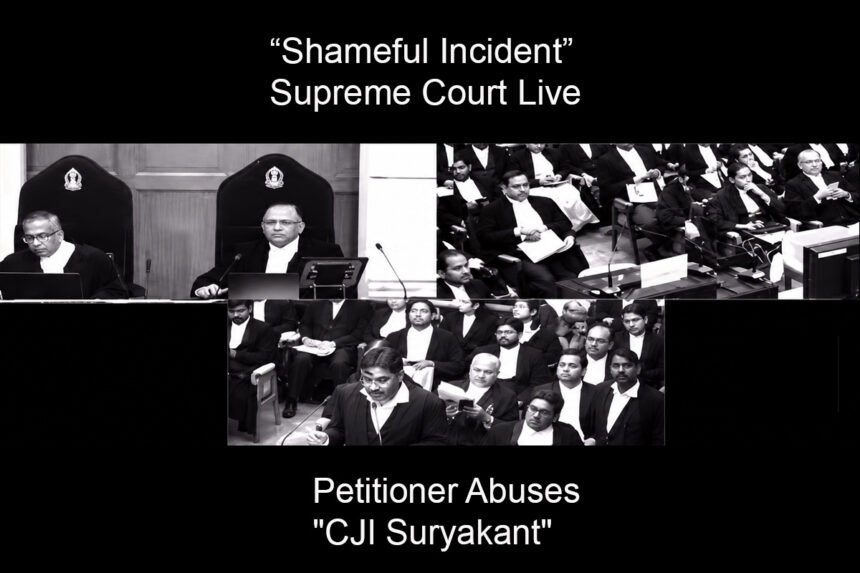
The Supreme Court recently clarified that its earlier interim order regulating the use of audio and video recordings of court proceedings does not prohibit recognized news organizations from reporting on hearings. The clarification comes in the wake of persistent confusion surrounding the practical implementation of the Court’s previous directives regarding digital media and courtroom transparency.
The Bench, comprising Chief Justice of India Surya Kant and Justices Joymalya Bagchi and V Mohana, addressed the ambiguities that had lingered following their July 31 order. The Court explicitly noted that some confusion had persisted over earlier clarifications, prompting a definitive statement to ensure that the vital role of the media in reporting judicial matters is not unnecessarily hampered.
Clear Distinction Between Reporting and Audio-Video Usage
In its detailed clarification, the Supreme Court stated that its order must not be construed as imposing a blanket prohibition on the reporting of court proceedings by recognized news outlets. Journalists, reporters, and media houses may, therefore, continue to report on judicial proceedings, legal developments, and final pronouncements to keep the general public informed.
However, a strict caveat was drawn regarding digital media assets: audio or video clips of the court proceedings shall not be utilized in the course of such reportage without official authorization. While courtroom journalism, print reporting, and textual summaries remain completely unaffected, the actual audio-visual segments captured from the courtroom cannot be broadcast or embedded by news outlets in their digital coverage.
Background of the Restrictions
The ongoing legal discourse stems from the Court’s July 24 interim order, which laid down stringent restrictions against the extraction, dissemination, monetization, posting, reposting, uploading, transmitting, modification, storing, and hosting of audio-video recordings of judicial proceedings on social media and other digital platforms.
The framework requires that any such usage must secure prior formal permission obtained directly from the Secretary General of the Supreme Court or the Registrar General of the concerned High Court. Even when issuing those initial interim directives, the bench had explicitly noted that the measures would have no direct bearing on standard journalistic reporting of court proceedings by recognized media houses.
Administrative Steps and Future Outlook
Beyond the immediate restrictions on audio-video circulation, the Supreme Court has also directed the Union government to formulate and place before it a comprehensive proposal in consultation with relevant nodal ministries to give effect to the broader prayers raised in the petition. Furthermore, all High Courts across the country have been instructed to file detailed status reports regarding the adoption of the Model Rules for Live Streaming and Recording of Court Proceedings, alongside an evaluation of the technical and logistical feasibility of continuous, uninterrupted live streaming.
As courts nationwide balance the constitutional imperative of open justice with the orderly management of courtrooms, media professionals and legal reporters operating across jurisdictions like the Pune District Court must navigate these evolving compliance standards carefully. The matter has been scheduled for further hearing on September 18, where additional guidelines and status reports are expected to be reviewed by the bench.