

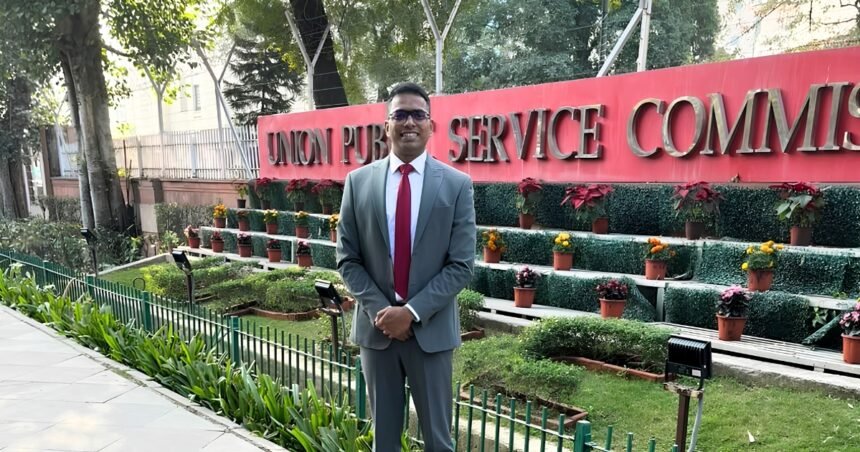
In a world where success is often measured by urban privilege, the journey of Adv. Sunil Kadam stands as a powerful testament to grit and determination. Hailing from a modest farming family and completing his education in a Marathi-medium Zilla Parishad school, Kadam has broken through traditional barriers to clear the prestigious UPSC Civil Services Examination.
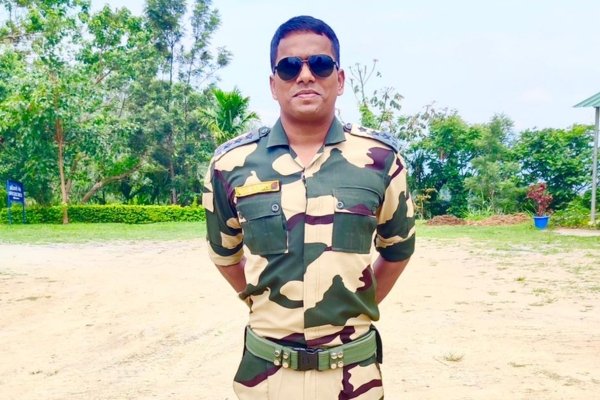
His path is as diverse as it is inspiring. After earning his law degree from Savitribai Phule Pune University and practicing at the Pune District Court, he cleared the Central Armed Police Forces exam and served for five years as an Assistant Commandant in the Border Security Force. Stationed along volatile frontiers, he earned three Director General Commendation Discs and became known as “The Lawyer in Uniform” for counseling peers on legal matters.
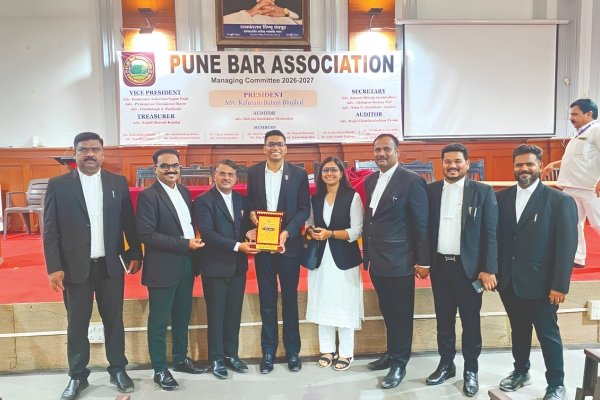
After returning to civilian life, completing his LL.M. in Human Rights, and dedicating himself to teaching, Kadam’s relentless pursuit of public service has culminated in his selection for the elite civil services. Pune Bar & Bench representative Ruchi Memane sat down with him to explore this remarkable transition.
Q1: How did your journey from a legal practitioner to a top-tier civil services officer begin, and what inspired you to pursue the UPSC?
A: My path has been a unique blend of law, public service, and continuous learning. After completing my B.S.L., LL.B. in 2014 from Savitribai Phule Pune University and practicing at the Pune District Court, I cleared the Central Armed Police Forces exam in 2015 and served for nearly five years as an Assistant Commandant in the Border Security Force. Later, I completed my LL.M. in Human Rights from Bharati Vidyapeeth, Pune, and resumed teaching law and practicing. My desire to join the civil services began even before my legal education, as I firmly believed that law provides the structural mindset needed to serve society on a larger scale.
Q2: How did your legal background and education aid your UPSC preparation?
A: Legal studies served as my biggest catalyst during the UPSC preparation. Constitutional law forms the backbone of administration, and studying it gave me conceptual clarity on how governance functions practically. Understanding legislative frameworks, procedural fairness, and statutory compliance made grasping administrative topics much easier and gave me a distinct edge during the examination.
Q3: You served as a BSF Assistant Commandant in challenging terrains like Jammu & Kashmir, Punjab, and Mizoram. How did those military experiences shape you?
A: Serving along the India-Pakistan and India-Bangladesh borders taught me discipline, resilience, and leadership under pressure. Interestingly, my legal background helped me there too; since I held a law degree, many fellow personnel approached me with personal or land-related legal queries. Operating within my mandate, I guided them, which earned me the affectionate moniker “The Lawyer in Uniform.”
Q4: What were the major challenges you faced during this demanding journey?
A: I come from a modest farming family and completed my schooling up to the tenth standard in a Marathi-medium Zilla Parishad school. Transitioning to higher education in Pune presented initial adaptation challenges, and I had to balance studies, financial responsibilities, and competitive exam preparation. However, I viewed these challenges as opportunities to expand my comfort zone rather than obstacles.
Q5: What role does legal education play in public administration and good governance?
A: Administrative officers constantly deal with statutory powers, procedural fairness, and rule compliance. Whether it is a police officer implementing criminal law or a diplomat negotiating international matters, law acts as a guiding framework. Legal education is one of the most versatile professional qualifications because it builds analytical thinking, problem-solving skills, and balanced decision-making.
Q6: Why did you decide to leave a stable military career to return to civilian life and pursue civil services?
A: While my time in the BSF was deeply fulfilling, my vision for public service extended to broader systemic administration. Returning to civilian life in 2022, completing my LL.M., and returning to the courtroom and classrooms allowed me to re-engage with society at the grassroots before taking the final leap into the civil services.
Q7: How did you manage the balance between active legal practice, teaching, and rigorous UPSC preparation?
A: It required strict time management and unwavering discipline. Balancing professional legal commitments, guiding students, and maintaining solitary study hours was undoubtedly intense. However, the multitasking skills I developed during my military and legal careers helped me stay focused and organized through every stage.
Q8: How important is a candidate’s regional or linguistic background when appearing for competitive examinations like the UPSC?
A: Background is never a barrier to success. Coming from a Marathi-medium Zilla Parishad school, I initially faced doubts, but I realized that sincere and disciplined efforts matter far more than English-medium pedigree. Rural students possess immense resilience, and once they overcome self-doubt, they can compete at the highest national levels.
Q9: How do you define true success, particularly for the younger generation that often measures achievements by ranks and titles?
A: True success is not just about clearing an exam or securing a top rank. While results are memorable milestones, real success is measured over decades by the life you build, the values you uphold, the people you help, and the positive impact you create in society without sacrificing personal fulfillment and family relationships.
Q10: What is your core message for young law students and civil service aspirants?
A: Never let your background or self-doubt define your potential. The greatest limitations are usually the mental walls we build around ourselves. Commit yourself to sincere, disciplined efforts, step out of your comfort zone, and trust that honest hard work will always guide you toward your goals.