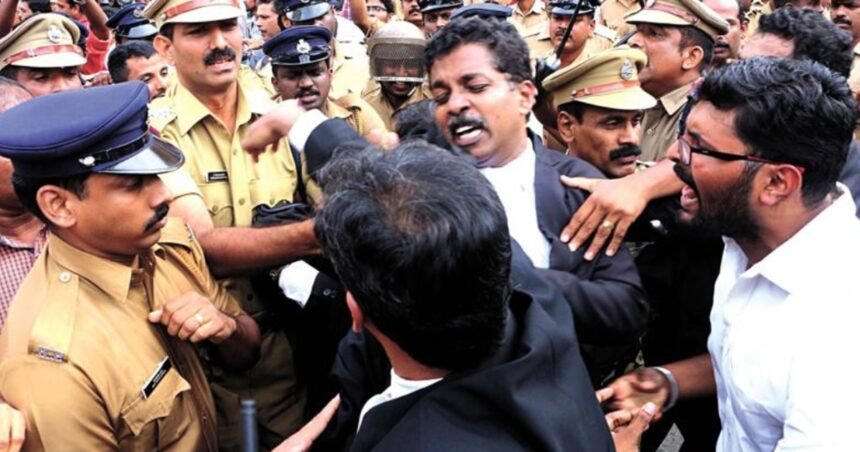
The criminal justice system in any constitutional democracy rests on twin pillars that cannot afford to stand at cross-purposes: the police mechanism, charged with maintaining law and order, and the legal fraternity, entrusted with upholding fundamental rights and ensuring fair trial access. Both are officers of the process, bound by duty to the Constitution. Yet, when mutual respect gives way to friction, the very integrity of public justice begins to fray.
Recent confrontations between lawyers and law enforcement personnel—such as the deeply concerning incident at Lonikand Police Station in Pune, where an advocate faced physical aggression inside station premises—serve as a painful wake-up call. In such situations, senior police leadership ought to have immediately put a formal inquiry into action rather than turning a deaf ear or allowing delays to stall the process. Turning a blind eye or delaying swift administrative response to such grave occurrences creates widespread unrest and resentment within the legal fraternity. Such institutional apathy is detrimental under any circumstances, as it risks paralyzing court proceedings, triggering boycotts, and eroding public confidence in the legal order.
Police personnel operating in demanding environments and advocates defending citizen rights are not adversaries; they are essential partners in the administration of justice. An advocate visiting a police station to represent an accused or assist a victim is performing a mandatory duty, not obstructing an investigation. Equally, an investigating officer executing a lawful mandate deserves professional dignity, free from unwarranted confrontation.
To bridge the gap between these two institutions, we must move past knee-jerk hostility and rebuild avenues of institutional dialogue. Senior administrative officers and bar leaders carry a shared responsibility to cultivate an environment where grievance redressal is swift, transparent, and fair. Disciplinary standards must be upheld without institutional bias or delay, while daily operational protocols must ensure that lawyers can discharge their legal obligations with dignity and safety inside police facilities. True justice is never achieved through dominance or retaliation, but through mutual balance. Having observed the legal profession closely through the legacy of my late father, veteran criminal practitioner Late Mohanrao Dongare, one fundamental truth remains clear: the rule of law survives only when those who enforce the law and those who defend it stand together in mutual respect, professional empathy, and unwavering commitment to the public good.