New Delhi | November 27, 2026
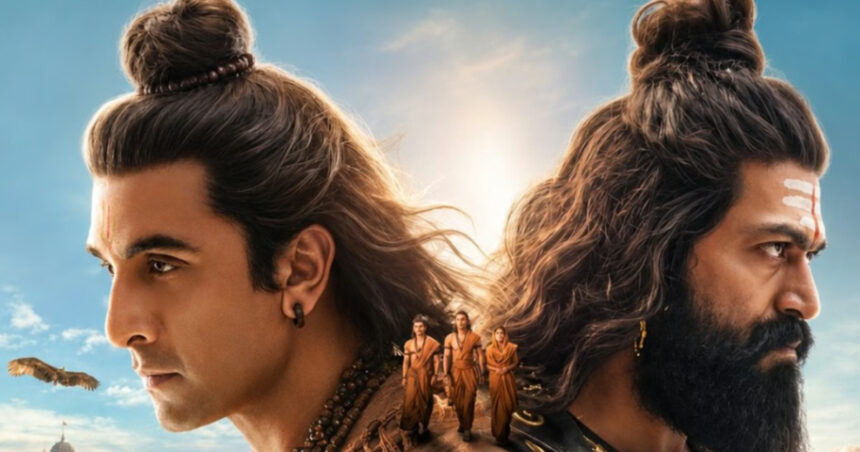
The Supreme Court has decided against granting a matter relating to a ‘Ramayana’ film priority for hearing as it feels there are alleged misrepresentations of certain facts in the film.
This was raised before a bench of Chief Justice Surya Kant and Justice Joymalya Bagchi and Justice V. Mohana.
The petitioner’s lawyer told the court that whilst the petition was filed on November 23, it has not yet been given a priority for hearing.
No priority given following film’s release
Whilst the petitioner’s lawyer sought priority for the matter, the Chief Justice noted that as the film had already been released, those wishing to see it had already done so.
In response to the lawyer’s statement that there were alleged misrepresentation of facts in the film, Justice Joymalya Bagchi suggested that the court would not be able to address the petition in the way the petitioner was suggesting.
It was also pointed out that where someone has their own understanding of the Ramayana, they can convey that in their own art.
Art and the law
This case brings to light wider issues about the interplay between art and law.
Section 19(1)(a) of the Constitution guarantees a right to freedom of speech and expression. However, this is subject to reasonable restrictions as outlined in section 19(2).
Whilst films and other art can be bound by relevant legislation and regulation, simply disapproving of another’s artistic representation is not, in itself, sufficient for the law to enable the courts to interfere.
Furthermore, what was said in relation to this case should not be taken as the court’s final assessment of the film’s content or as an exhaustive analysis of the extent to which the Constitution permits artistic freedom of expression.
No real decision made on the petition’s content
Although the Supreme Court has decided not to give priority for hearing of this petition, this does not confirm that the court has analysed the film’s factual correctness or made an in-depth decision on the petition’s content.
It is essential to recognise that there is a difference between decisions not to prioritise and decisions to reject petitions following a full hearing. A non-priority decision does not necessarily mean that all the legal points within a petition have been analysed.
Court: Supreme Court of India
Bench: Chief Justice Surya Kant, Justice Joymalya Bagchi and Justice V. Mohana
Issue: Petition alleging factual distortions in a Ramayana-based film
Development: Urgent listing declined on November 27, 2026
Legal Significance: The development illustrates the distinction between judicial scrutiny of a legally actionable grievance and a disagreement with a creative interpretation. The Court did not deliver a final merits judgment on the film’s accuracy.

Kshitij Naik
Kshitij Naik is a fourth-year B.A. LL.B. student at MIT-WPU School of Law, Pune, with a strong academic record and multiple published research papers to his name. His writing focuses on arbitration, intellectual property, and corporate law. He believes good legal writing should simplify, not complicate, and brings that approach to every article he writes.