
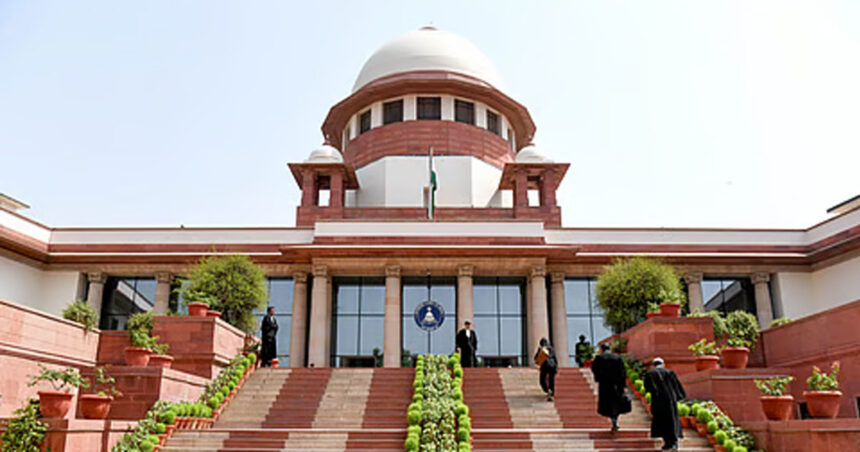
NEW DELHI, November 19, 2026 : The Supreme Court has sought responses from the Union Government and its Secretary General on a petition challenging the nearly 11-year delay in finalising the revised Memorandum of Procedure (MoP) for judicial appointments. The petition, filed by the NGO Lok Prahari, also seeks to bring the minutes of Supreme Court and High Court Collegium meetings concerning judicial appointments within the ambit of the Right to Information Act, 2005.
A Bench comprising Justice M. M. Sundresh and Justice P. B. Varale issued notice on November 18, 2026. The Court also permitted the petitioner to file an amended petition. Senior Advocate Sanjay Hegde appeared on behalf of Lok Prahari.
Why has there been a delay in changing the Memorandum of Procedure?
The Memorandum of Procedure outlines the process for the appointment, promotion and transfer of judges to the Supreme Court and High Courts under the collegium system. It was first introduced in 1999.
In 2015, a 5-judge bench of the Supreme Court declared the National Judicial Appointments Commission (NJAC) act unconstitutional. This meant that the collegium system was maintained.
However, in deciding the NJAC case, the Supreme Court also requested suggestions to improve the current system. The court requested that the Memorandum of Procedure be reviewed following consultation between the Union Government and the Chief Justice of India (order dated 16 th December 2015).
Despite nearly 11 years having passed, changes have yet to be made to the MoP.
Reforms Sought
Lok Prahari considers this delay to be an issue. They argue that the current system is not sufficiently transparent or objective.
The petition seeks various improvements to the process, including:
Transparent criteria for candidates. Clear selection criteria for judicial candidates.
A permanent secretariat. A body to assist the functioning of the collegium.
A complaint investigation process. A way to investigate complaints or negative information relating to potential judicial candidates.
More transparency in selection. Safeguards in place to make selection of judges more objective.
Directions have been sought from the court to implement changes to the MoP within a specified time frame. The petitioner requests that changes are made within one month of the required decision being made by the Chief Justice of India.
Collegium Minutes – Should they be subject to the RTI Act?
A major part of this petition relates to the transparency of meetings held by the collegium within both the Supreme and High Courts.
Lok Prahari seek directions to include the minutes of these meetings within the scope of the Right to Information Act 2005. Greater transparency in decision making would increase accountability in the process of appointing judges, according to the petition.
Issues therefore arise in determining how much transparency should be given to the selection process, and what information should be made public without causing issues for the institution.
However, in this case, it has not yet been decided by the Supreme Court whether Collegium minutes should be subject to the RTI Act. Therefore, this is still relief being sought from the petitioner.
Next Steps
The Supreme Court has listed certain parties as respondents in this case. It has requested responses from them. It has also been permitted for amendments to be made to the petition.
This case is significant in that the Memorandum of Procedure is an important element in the framework for appointing judges in India’s constitutional courts. If and when the court addresses the issues raised in this case, it may cause greater focus on balancing judicial independence, transparency and accountability.
No final orders have currently been made to make Collegium minutes public, or to implement the suggested changes. The matter is still pending in the Supreme Court.