


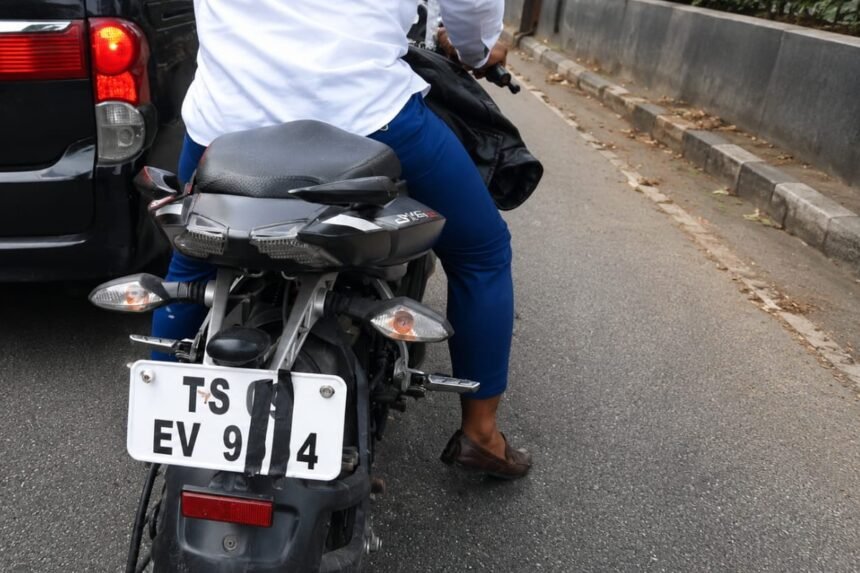
In a significant ruling protecting citizens from over-criminalization of regulatory breaches, the Supreme Court has held that covering a vehicle’s number plate is a violation under the Motor Vehicles Act, 1988 (MV Act), but it cannot be prosecuted as a criminal offence of cheating under Section 420 of the Indian Penal Code (IPC).
A bench comprising Justice Sanjay Karol and Justice Augustine George Masih set aside a Telangana High Court order and quashed a criminal case registered against a motorist who was caught riding an Activa scooty with a black mask covering his rear number plate.
The appellant had challenged an FIR registered by patrol police under Section 420 IPC and Section 80(a) of the MV Act. The police alleged that by concealing the rear plate, the rider intended to deceive law enforcement and avoid traffic challans.
Rejecting this stance, the Apex Court observed that police apprehension regarding potential evasion of challans or difficulty in tracing offenders is “at best, speculative.”
“The regulatory breach of obstructing the number plate under the MV Act and rules thereunder cannot be dressed as an offence under Section 420 of the IPC without establishing the essential ingredients as required,” the bench noted. Absence of Dishonest Intention.
Reiterating the core prerequisites for establishing the offence of cheating under Section 420 IPC—namely, dishonest intention, inducement of a person, and delivery or alteration of property—the Court noted that these ingredients were entirely missing.
Significantly, the bench highlighted a crucial factual inconsistency in the prosecution’s theory: the appellant had only covered the rear number plate, while the front plate remained completely visible and legible. The Court reasoned that this selective concealment goes directly against any planned scheme to evade identification or detection.
While ruling that the continuation of criminal proceedings amounted to an abuse of the process of law, the Supreme Court made it clear that regulatory accountability remains intact.
The Court allowed the appeal and directed the petitioner to deposit the prescribed penalty under Section 177 of the MV Act before the concerned authority within one month, clarifying that the quashing of the criminal case does not exempt the motorist from statutory traffic penalties.