



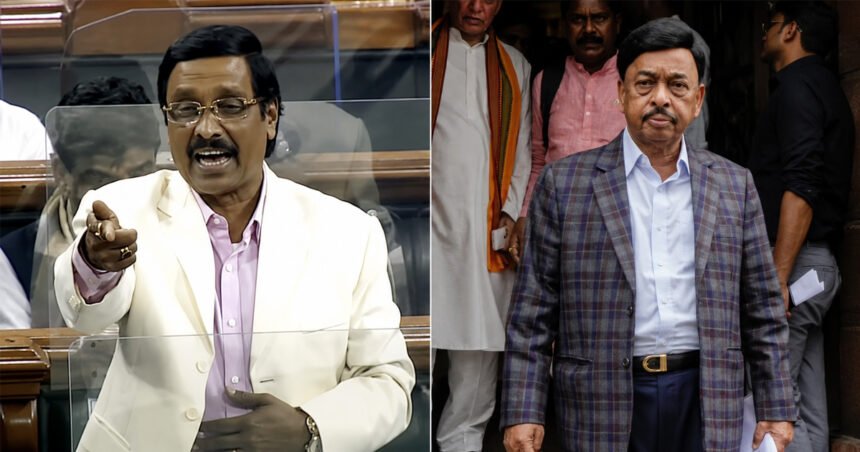
Kolhapur : Vinayak Raut’s attempt to unseat Narayan Rane from the Ratnagiri-Sindhudurg Lok Sabha seat has failed. The Kolhapur Bench of the Bombay High Court dismissed his election petition, and Justice Shailesh Brahme ruled that it did not plead the material facts that the Representation of the People Act, 1951 requires.
The Court found that the petition breached Section 83(1)(a) and (b) of the Act. Under these provisions, an election petition must give a concise statement of material facts and, where corrupt practices are alleged, full particulars of them. General allegations without that foundation do not meet the statutory standard.
Rane’s side argued that the petition lacked the facts and particulars needed to support the corrupt-practice allegations, and that its verification was defective. Raut contended that the documents and evidence he had placed on record showed a clear cause of action, and that the case deserved a full trial.
The High Court was not persuaded. It held that the defects were substantial and could not be cured, so the petition failed before reaching trial.
Why it matters: Election law is unusually strict about how a case is pleaded. Supporting material such as videos, news reports and affidavits cannot make up for a petition that does not set out its case in the form the statute demands. The rule has a clear purpose. The elected candidate must know exactly what allegations they have to answer, and a people’s mandate cannot be tied up in open-ended litigation based on vague claims.
The ruling also shows the line between political dispute and legal adjudication. The court does not ask whether a result is controversial. It asks only whether a ground recognised by the statute has been properly pleaded and proved.
With this order, Rane’s election survives the challenge, although the petitioner may still pursue remedies available under election law.